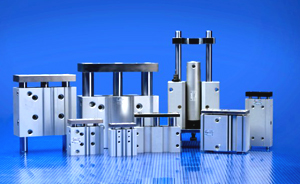
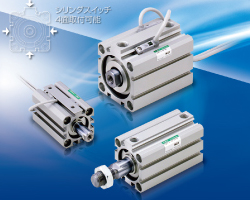
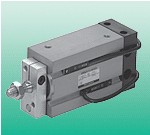
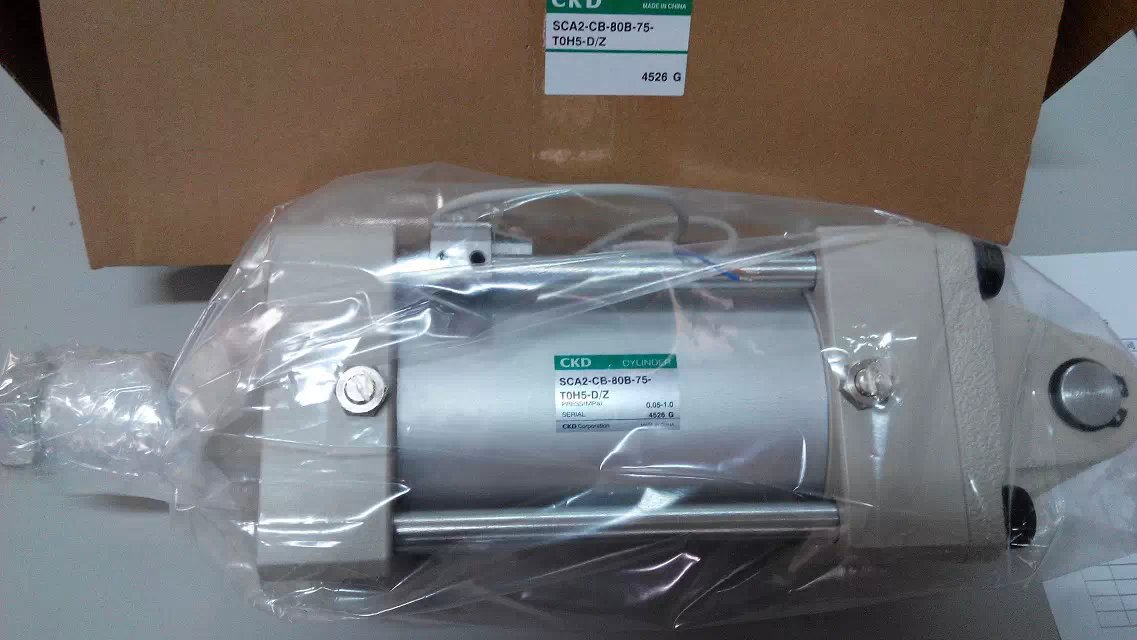
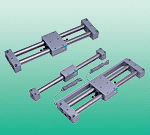
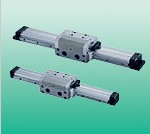
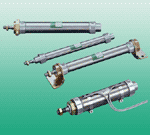
CKD Guided Cylinder STS-M-12-20 is a space-saving square cylinder that concentrates all components within the body, shortening the overall length to the extreme. The cylinder body structure has been optimized for both short and long stroke applications, featuring guide rods on both sides for high precision, high rigidity, and space-saving. A wide variety of products are available, suitable for various applications and environments such as elevators and thrusters.
【Maximum stroke of 400mm】The long-stroke type STL with diameters ranging from Φ8 to Φ16 corresponds to a maximum stroke of 200mm, while diameters from Φ20 to Φ80 correspond to a maximum stroke of 400mm, supporting a wide range of applications. 【Improved assembly accuracy】Equipped with two guide rods using sliding or rolling bearings. High anti-rotation and anti-jump accuracy contribute to enhancing the accuracy of assembly machines.CKD Guided Cylinder STS-M-12-20【High load capacity】With two guide rods, the cylinder has high rigidity and can withstand lateral loads. 【End plate material options】In addition to aluminum (standard), steel is also available as an option for the end plate material. 【Miniaturization of assembly machines】With guide rods, there is no need for a separate anti-rotation mechanism, which facilitates the miniaturization of assembly machines. Stroke adjustment type (extension P, anti-fall type Q, with solenoid valve V, with air cushion C, heat-resistant type (120゜) ? T seal material: Fluororubber? T2 low-speed type O strong scraper type G circular scraper type G1 oil-resistant scraper type (general) G2 oil-resistant scraper type (chlorine series) G3 anti-weld spatter adhesion type G4 micro-speed type? F with strong magnetic field, two-color indication, preventive maintenance switch ? L1NPT φ32 and above NG φ32 and above ? G with rubber air cushion? C corrosion-resistant type (end plate material aluminum alloy) M corrosion-resistant type (end plate material SUS) M1 plate material specified steel F copper-free treatment type? P6 cleanroom special specification (exhaust treatment) P72 cleanroom special specification (vacuum) P73CKD Guided Cylinder STS-M-12-20 with positioning hole E cylinder switch Notes Note 1. Only φ 50 to 100 can be manufactured. Note 2. Only the rear anti-fall type can be manufactured. Note 3. Due to the selection of G3, the seal material inside the cylinder for the combination of G3 and T2 is fluororubber. (T2 symbol not needed) In addition, the combination of G2, G3 and M (corrosion-resistant type) is the same; when G2 or G3 is selected, M (corrosion-resistant type) is included. (M symbol not needed.) Note 4. The hole position for the positioning hole (E) varies depending on the cylinder套 length, please pay attention.
Guided Cylinder STS-M-12-20 belongs to the Air Pressure Cylinders series under CKD company, model number STS-M-12-20. To purchase or inquire about Guided Cylinder STS-M-12-20, you can directly contact 158 0047 0089 (Mr. He).
1. Cylinders: Used to convert the energy of compressed air into mechanical energy to produce linear motion.
2. Pneumatic valves: Used to control the direction, speed, and pressure of airflow, regulating the operation of pneumatic systems.
3. Pneumatic motors: Devices that convert compressed air into rotary motion.
4. Air tubes and connectors: Used to connect various components in pneumatic systems and transmit air.
Yes, CKD pneumatic components require regular maintenance to ensure normal operation and extend service life. Key maintenance points include:
- Regularly check and replace seals and gaskets to prevent air leakage.
- Inspect and clean filters to ensure clean air quality.
- Lubricate moving parts to reduce wear and improve efficiency.
- Check air tubes and connectors to ensure secure and undamaged connections.
When selecting the appropriate CKD pneumatic components, consider the following factors:
Application requirements: Understand the specific working environment and tasks, such as load, speed, and stroke.
Air source conditions: Ensure that the pressure and flow of the air source meet the component’s requirements.
Installation space: Confirm available space and choose components of suitable size.
Environmental factors: Consider the temperature, humidity, and potential corrosiveness of the working environment to select suitable materials and designs.
Common pneumatic system faults include:
Air leakage: Causes efficiency decline; check seals, connections, and tubes, find leak points, and repair or replace.
Stuck cylinder piston: Possibly caused by dirt or insufficient lubrication; clean the piston and add lubricant.
Valve failure: Check electrical control signals, ensure smooth airflow, and verify if the valve itself is damaged.
Insufficient pressure: Inspect air source pressure, filters, and piping to ensure no blockage or leakage.