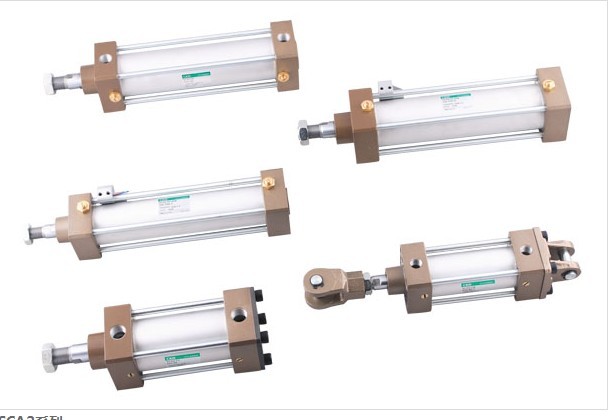
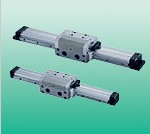
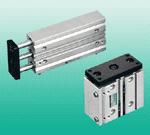
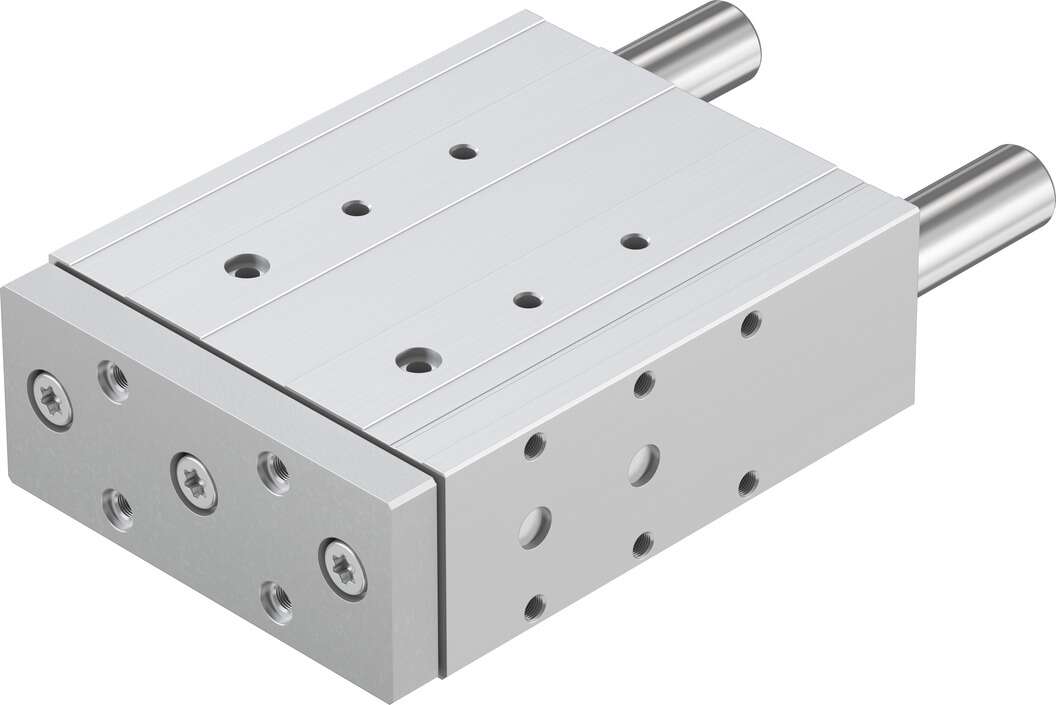
Medium-sized cylinder STS-BG3-20-50-T2YLV3-D【Product Details】The cylinder is composed of a barrel, end caps, a piston, a piston rod, and sealing elements. Its internal structure is shown in the diagram: cylinder principle diagram:
1. Barrel The inner diameter of the barrel represents the size of the cylinder's output force. The piston must make smooth reciprocating sliding movements within the barrel. The surface roughness of the inner surface of the barrel should reach Ra0.8um. For steel pipe barrels, the inner surface should also be hard chrome plated to reduce frictional resistance and wear and to prevent rust. In addition to high carbon steel tubes, high-strength aluminum alloy and brass are also used as barrel materials. Small cylinders may use stainless steel tubes. Cylinders with magnetic switches or those used in corrosive environments should use stainless steel, aluminum alloy, or brass as the barrel material. The piston of the cylinder uses a combination seal to achieve bidirectional sealing, and the piston and piston rod are connected by pressure riveting, without nuts.
2. End caps The end caps are equipped with air inlet and outlet ports, and some also have a buffer mechanism inside the end caps. The rod side end cap is equipped with sealing rings and dust rings to prevent air leakage from the piston rod and to prevent external dust from entering the cylinder. The rod side end cap is equipped with a guide sleeve to improve the guiding accuracy of the cylinder, to withstand a small amount of lateral load on the piston rod, to reduce the bending amount of the piston rod when extended, and to prolong the service life of the cylinder. Guide sleeves are usually made of sintered oil-impregnated alloy, forward-tilting copper castings. End caps used to be made of malleable cast iron, but now to reduce weight and prevent rust, aluminum alloy die casting is commonly used, and small cylinders may use brass materials.【Model Catalog】Pneumatic components data download Solenoid valve 4KA110-M5-C2-DC24V
Cylinder SCPG-00-16-15
Cylinder SSD2-X-16-10-W1
Solenoid valve 4GB119-00-A2N-3
Cylinder SSD2-XL-12-5-TOH3-D-N
Cylinder CMK2-LS-20-50-F
Solenoid valve AG41-02-2-AC220V
Solenoid valve 4KB219-00/220V
Solenoid valve 4KA320-08-B-AC110V
Cylinder SCPG-00-10-20
Pressure gauge DVL-S-06-H44-08
Filter pressure reducing valve W4000-15-F1
Solenoid valve 4GD219-C6-E2-3
Cylinder SCPG-00-10-15
Cylinder SCPG-CB-16-45
Cylinder SSD2-X-16-10-W1
Solenoid valve AB21-02-3-A-DC24V
Fluid valve CVSE2-10A-70-02HSB-3
Solenoid valve FS1-04-3-AC200VSTS-BG3-20-50-T2YLV3-D rodless cylinder Cylinder CKV
Medium-sized cylinder STS-BG3-20-50-T2YLV3-D belongs to the Air Pressure Cylinders series under CKD company, model number STS-BG3-20-50-T2YLV3-D. To purchase or inquire about Medium-sized cylinder STS-BG3-20-50-T2YLV3-D, you can directly contact 158 0047 0089 (Mr. He).
1. Cylinders: Used to convert the energy of compressed air into mechanical energy to produce linear motion.
2. Pneumatic valves: Used to control the direction, speed, and pressure of airflow, regulating the operation of pneumatic systems.
3. Pneumatic motors: Devices that convert compressed air into rotary motion.
4. Air tubes and connectors: Used to connect various components in pneumatic systems and transmit air.
Yes, CKD pneumatic components require regular maintenance to ensure normal operation and extend service life. Key maintenance points include:
- Regularly check and replace seals and gaskets to prevent air leakage.
- Inspect and clean filters to ensure clean air quality.
- Lubricate moving parts to reduce wear and improve efficiency.
- Check air tubes and connectors to ensure secure and undamaged connections.
When selecting the appropriate CKD pneumatic components, consider the following factors:
Application requirements: Understand the specific working environment and tasks, such as load, speed, and stroke.
Air source conditions: Ensure that the pressure and flow of the air source meet the component’s requirements.
Installation space: Confirm available space and choose components of suitable size.
Environmental factors: Consider the temperature, humidity, and potential corrosiveness of the working environment to select suitable materials and designs.
Common pneumatic system faults include:
Air leakage: Causes efficiency decline; check seals, connections, and tubes, find leak points, and repair or replace.
Stuck cylinder piston: Possibly caused by dirt or insufficient lubrication; clean the piston and add lubricant.
Valve failure: Check electrical control signals, ensure smooth airflow, and verify if the valve itself is damaged.
Insufficient pressure: Inspect air source pressure, filters, and piping to ensure no blockage or leakage.