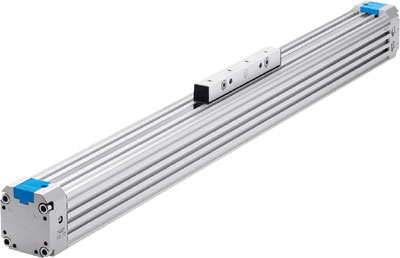
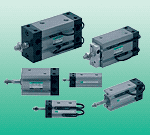
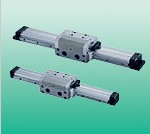
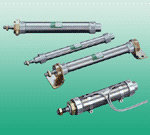
The festo rodless cylinder DGC-K-50-300-PPV-A-GK uses stainless steel material. The piston rod is made of PUR dust-proof sealing material. It can be fully repaired (the end cap is connected to the profile). The lubricant (compliant with USDA-H1 standard) and the piston rod dust-proof sealing material (compliant with FDA standard) are recognized by the food processing industry. 3. Modular standard air filter DNC, in line with DIN/ISO standards. Standard product: profile grooves for integrating air filter sensors. It has a variety of derivatives and installation methods. Diameter 32...125 mm, stroke 1...2,000 mm, with adjustable terminal buffer (PPV). 4. Standard air filter DNCB, in line with ISO 6431 standard. DNCB is a product of the DNC series, suitable for simple operating tasks. In applications with higher requirements for drive technology and functionality, DNCB is the choice. The new piston system runs very smoothly, with significantly enhanced energy absorption capacity. Compatible with accessories and installation fittings in the DNC modular system. Diameter 32...100 mm, stroke 2...2,000 mm. The new scaled precision adjustment system for terminal buffering. 5. Standard air filter/valve assembly DNCV integrates functions in the DNC standard air filter series, significantly improving efficiency. DNCV shortens the time for design, assembly, installation, and maintenance. It uses tested drivers, valves, start-up, flow control, and diagnostic units. The air inlet type complies with ISO6431 standard. It fully utilizes the bearing length of the basic standard air filter. Size 32...63mm. Normally closed type, when energized, the electromagnet generates sufficient electromagnetic force to lift the moving parts (consisting of the core, valve rod, upper and lower diaphragms/seals) from the valve seat, opening the valve; when de-energized, the spring force presses the moving parts against the valve seat, closing the valve. The reasons for the coil burning include moisture causing poor insulation and magnetic leakage, resulting in excessive current in the coil and burning out. Therefore, it is necessary to prevent rainwater from entering the pressure reducing valve. In addition, if the spring is too hard, the reaction force is too large, the number of coil turns is too few, and the suction is not enough, the coil can also burn out. In an emergency, the manual button on the coil can be switched from the normal
Rodless cylinder DGC-K-50-300-PPV-A-GK belongs to the Air Pressure Cylinders series under CKD company, model number DGC-K-50-300-PPV-A-GK. To purchase or inquire about Rodless cylinder DGC-K-50-300-PPV-A-GK, you can directly contact 158 0047 0089 (Mr. He).
1. Cylinders: Used to convert the energy of compressed air into mechanical energy to produce linear motion.
2. Pneumatic valves: Used to control the direction, speed, and pressure of airflow, regulating the operation of pneumatic systems.
3. Pneumatic motors: Devices that convert compressed air into rotary motion.
4. Air tubes and connectors: Used to connect various components in pneumatic systems and transmit air.
Yes, CKD pneumatic components require regular maintenance to ensure normal operation and extend service life. Key maintenance points include:
- Regularly check and replace seals and gaskets to prevent air leakage.
- Inspect and clean filters to ensure clean air quality.
- Lubricate moving parts to reduce wear and improve efficiency.
- Check air tubes and connectors to ensure secure and undamaged connections.
When selecting the appropriate CKD pneumatic components, consider the following factors:
Application requirements: Understand the specific working environment and tasks, such as load, speed, and stroke.
Air source conditions: Ensure that the pressure and flow of the air source meet the component’s requirements.
Installation space: Confirm available space and choose components of suitable size.
Environmental factors: Consider the temperature, humidity, and potential corrosiveness of the working environment to select suitable materials and designs.
Common pneumatic system faults include:
Air leakage: Causes efficiency decline; check seals, connections, and tubes, find leak points, and repair or replace.
Stuck cylinder piston: Possibly caused by dirt or insufficient lubrication; clean the piston and add lubricant.
Valve failure: Check electrical control signals, ensure smooth airflow, and verify if the valve itself is damaged.
Insufficient pressure: Inspect air source pressure, filters, and piping to ensure no blockage or leakage.