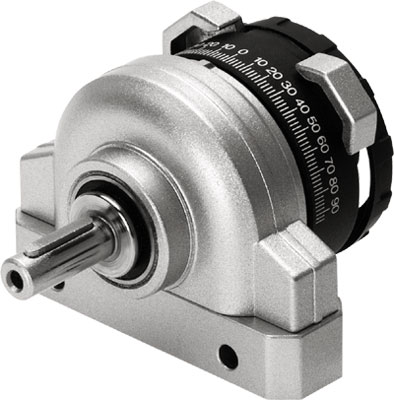
How should the replacement of the festo swing cylinder DSM-8-90-P-A-FW rod seal be handled? 1. By instantaneously braking the workpiece carrier with the piston rod. 2. By releasing the workpiece carrier through activation of the cylinder. 3. By the piston rod extending again through spring force or air source pressure until the roller contacts the workpiece carrier. The workpiece carrier continues to move forward. 4. After the workpiece carrier has passed, the piston rod extends to the end position. Stop the next tool carrier. Model, single acting or double acting, STA lock cylinder, STAF lock cylinder, with flange mounting, cylinder diameter ? [mm] stroke [mm] buffer, P with elastic buffer ring/pad at both ends position sensing, A through proximity switch typeR roller type, proximity switch SME/SMT-8, can be integrated into the cylinder barrel 30, 2 groove cap ABP for preventing dust from entering, cylinder diameter ? 20 32 50 80, cylinder diameter STA M5 Gx Gx -, STAF - M5 Gx Gx, stroke [mm] 15 20 30 30/40, piston rod ? [mm] 12 20 32 50, operating pressure [bar] 10, operating medium filtered compressed air, lubricated or unlubricated structural features piston cylinder, with mechanical reset buffer both ends with elastic buffer ring/pad, position sensing through proximity switch, mounting method through through hole, through internal thread, mounting position arbitrary, operating mode single acting or double acting. Anti-torsion both sides flat piston rod operating temperature1) [°C] +5 ... +601) Note the operating range of the proximity switch. -H- Note: This product complies with ISO 1179-1 and ISO228-1 standards. Force [N] cylinder diameter ? 20 32 50 80. Stroke 15 20 30 30 40. Allowable impact force on the extended piston rod 170 830 2,300 14,600 13,300. Spring force 13 ... 18 20 ... 42 43 ... 60 79 ... 115 101 ... 170. Under 'impact force', we obtained the maximum value of the force-time curve during impact/braking of movable loads. The lock cylinder must not switch under this force. Depending on the required stopping mass, it is best to use elasticity to buffer the impact force, reduce noise, and optimize the impact energy lock cylinder STA/STAF, roller type technical parameters allowable mass m and conveying speed v relationship The values in the right chart are based on the assumption that the workpiece carrier has an elastic buffer with a deformation path of 1 mm. The blocking cylinder valve, in addition to the valve flap being able to freely lift and lower, the rest is like a stop valve, fluid pressure causes the valve flap to lift from the valve seat sealing surface, medium backflow causes the valve flap to fall back onto the valve seat and cut off the flow. Depending on the usage conditions, the valve flap can be a full metal structure, or it can be in the form of an embedded rubber pad or rubber ring on the valve flap frame. Like a stop valve, the fluid passage through the lifting check valve is also narrow, so the fluid passes through the lifting check valve.
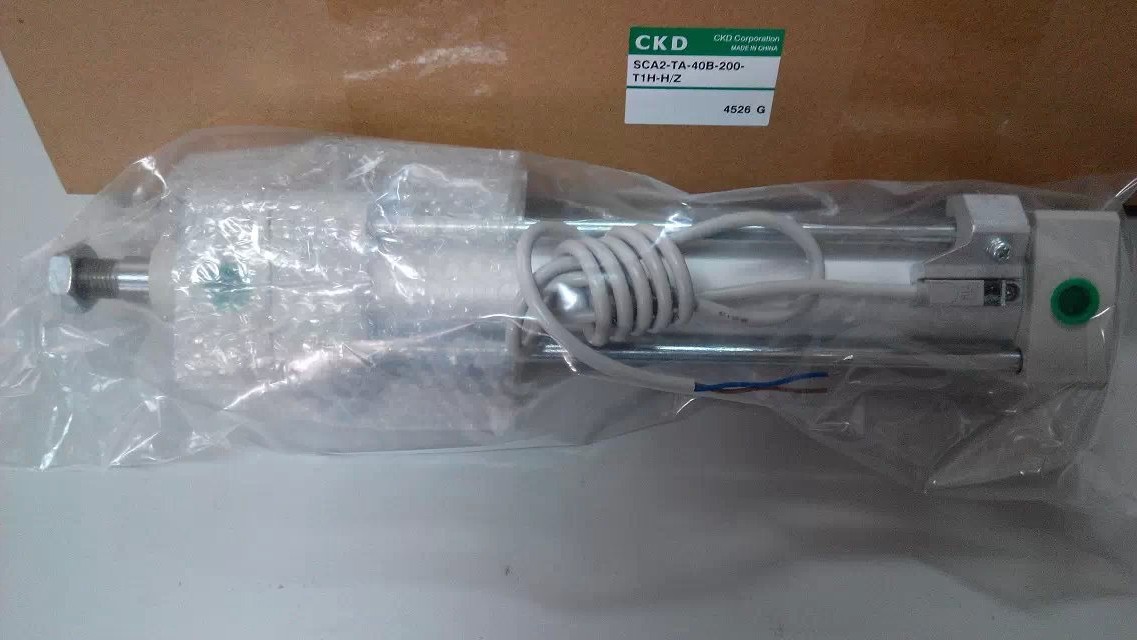
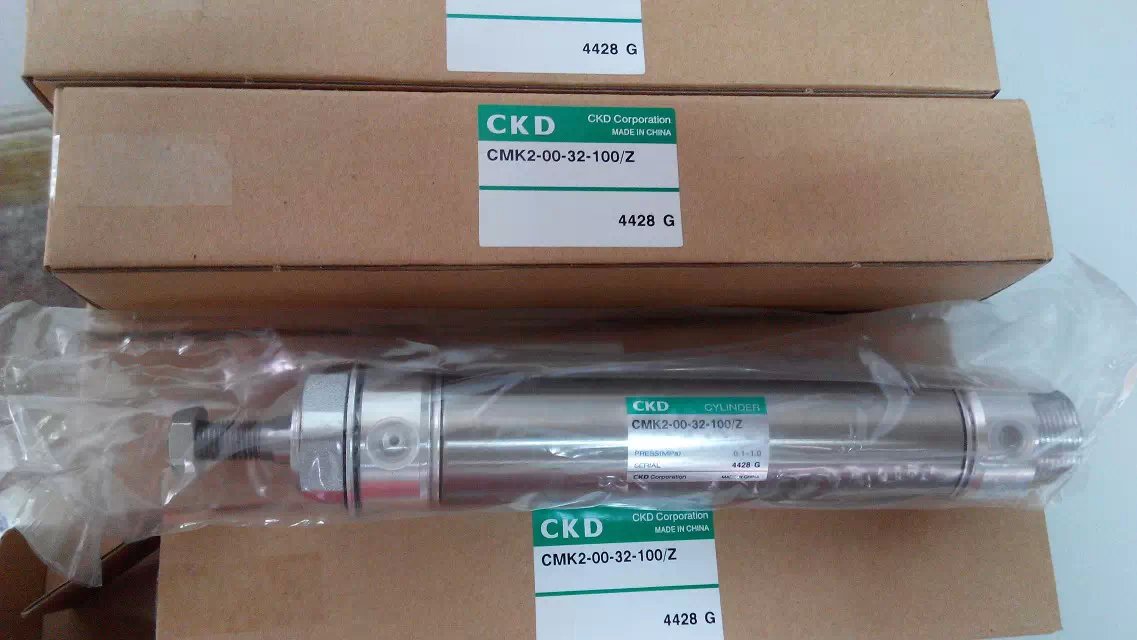
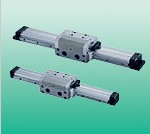
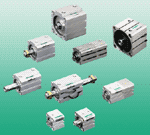
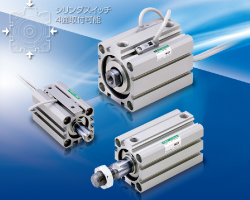
Rotary Oscillating Cylinder DSM-8-90-P-A-FW belongs to the Air Pressure Cylinders series under CKD company, model number DSM-8-90-P-A-FW. To purchase or inquire about Rotary Oscillating Cylinder DSM-8-90-P-A-FW, you can directly contact 158 0047 0089 (Mr. He).