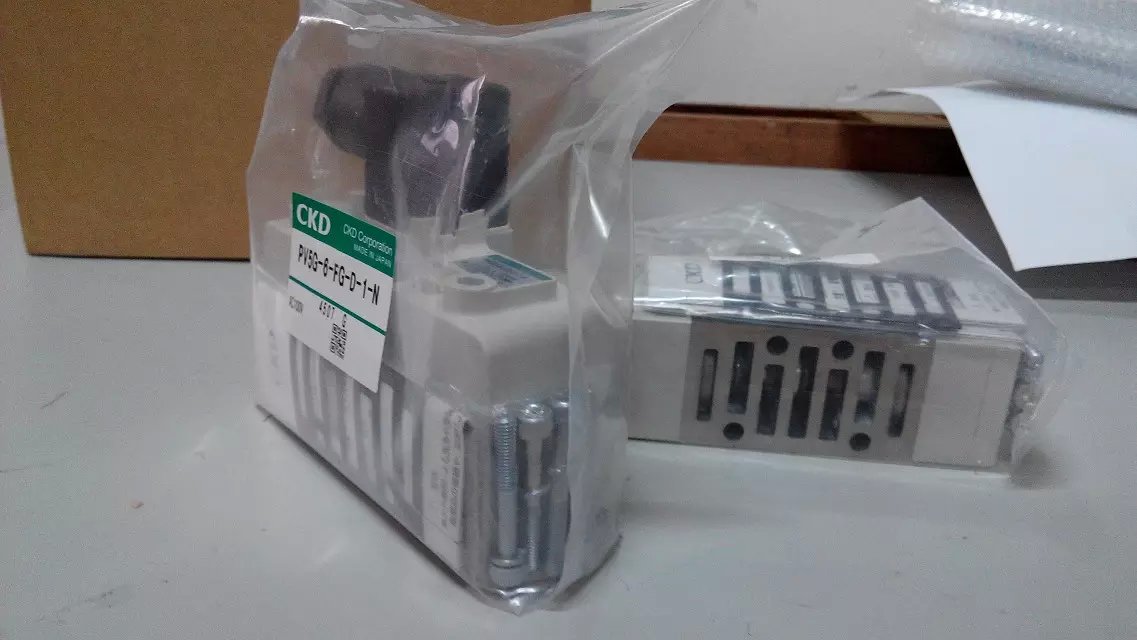
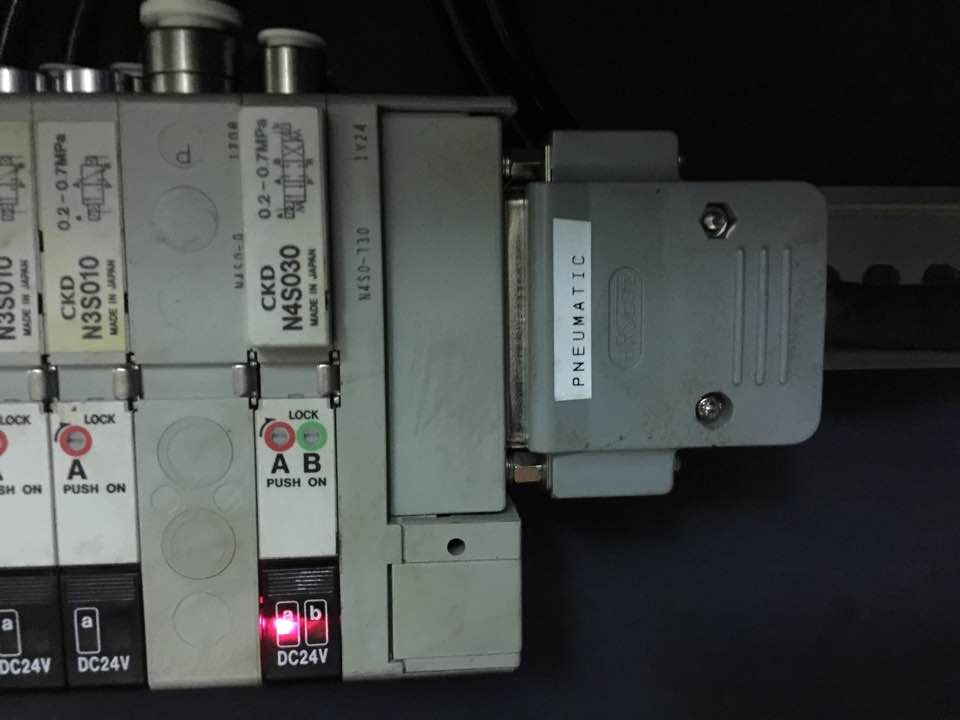
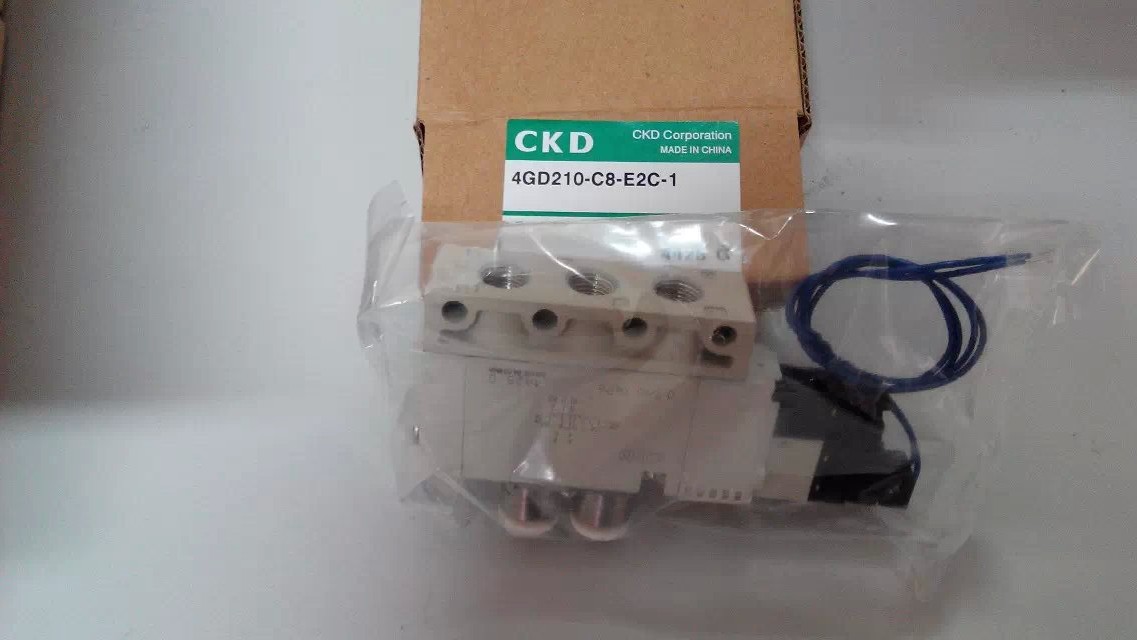
4F210-08-AC110V/Z solenoid valve CKD
Our company represents German FESTO and Japanese CKD products with short lead times and competitive prices, offering great value for money. Welcome your call for model inquiries and quotations.
Classification of CKD solenoid valves CKD solenoid valves are used to control the direction of fluids and are fundamental components of automation, belonging to actuators. They are commonly used in mechanical control and industrial valves to control the direction of the medium, thereby achieving control over the opening and closing of valves. The working principle is that the solenoid valve contains a sealed chamber with different positions having through holes, each connected to different oil pipes. In the center of the chamber is the valve, and on both sides are two electromagnetic coils. When the coil on one side is energized, the valve body is attracted to that side, controlling the movement of the valve body to block or allow different oil discharge holes. The inlet oil hole is always open, allowing hydraulic oil to enter different discharge pipes. Then, the pressure of the oil pushes the piston of the oil cylinder, which in turn drives the piston rod, and the piston rod drives the mechanical device to move. Thus, by controlling the on/off of the electric current through the electromagnetic coils, mechanical motion is controlled.
CKD solenoid valves are divided into three major categories based on their principles:
1. Step-by-step direct-acting solenoid valve: Principle: It is a combination of direct-acting and pilot-operated principles. When there is no pressure difference between the inlet and outlet, after being energized, the electromagnetic force directly lifts the pilot valve and the main valve closure in sequence, opening the valve. When the inlet and outlet reach the start-up pressure difference, after being energized, the electromagnetic force operates the pilot valve, and the pressure in the lower chamber of the main valve rises, while the pressure in the upper chamber decreases, utilizing the pressure difference to push the main valve open upwards; when de-energized, the pilot valve uses spring force or medium pressure to push the closure downwards, closing the valve. Characteristics: It can reliably operate at zero pressure difference or vacuum, high pressure, but requires a larger power and must be installed horizontally.
2. Pilot-operated solenoid valve: Principle: When energized, the electromagnetic force opens the pilot hole, and the pressure in the upper chamber drops rapidly, forming a higher pressure below and lower pressure above around the closure. The fluid pressure pushes the closure upwards, opening the valve; when de-energized, the spring force closes the pilot hole, and the inlet pressure quickly forms a higher pressure below and lower pressure above around the closure through the bypass hole, causing the fluid pressure to push the closure downwards, closing the valve. Characteristics: The upper limit of the fluid pressure range is higher, can be installed arbitrarily (customized) but must meet the fluid pressure difference conditions. Solenoid valves are divided into six subcategories based on differences in valve structure and materials: direct-acting diaphragm structure, step-by-step direct-acting diaphragm structure, pilot diaphragm structure, direct-acting piston structure, step-by-step direct-acting piston structure, and pilot piston structure.
3. Direct-acting solenoid valve: Principle: When energized, the electromagnetic coil generates an electromagnetic force that lifts the closure from the valve seat, opening the valve; when de-energized, the electromagnetic force disappears, and the spring presses the closure against the valve seat, closing the valve. Characteristics: It can operate normally at vacuum, negative pressure, and zero pressure, but the diameter is generally not more than 25mm.
4F210-08-AC110V/Z solenoid valve CKD
Two-position five-way solenoid valve 4F210-08-AC110V/Z belongs to the Electric Actuators series under CKD company, model number 4F210-08-AC110V/Z. To purchase or inquire about Two-position five-way solenoid valve 4F210-08-AC110V/Z, you can directly contact 158 0047 0089 (Mr. He).