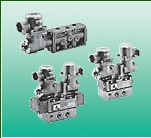
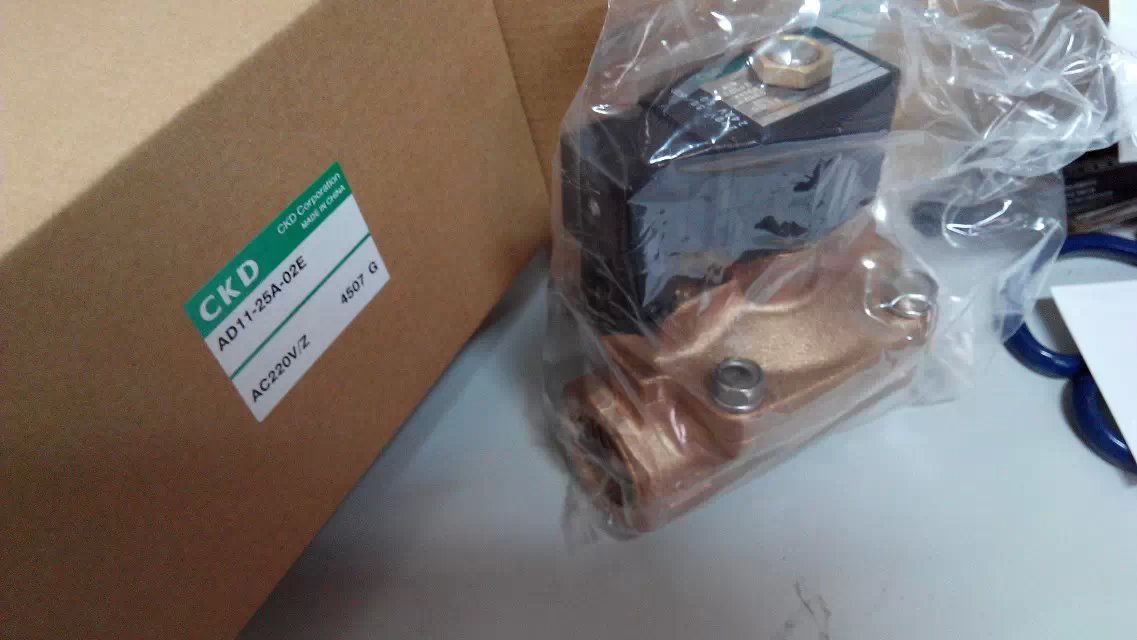
4F310-10-AC110V/Z Solenoid Valve CKD
The main features of CKD solenoid valves are:
1. Limited regulation accuracy and limited applicable media. Solenoid valves typically have only two states, on and off, and the valve core can only be in two extreme positions, unable to continuously regulate, (many new ideas are being attempted, but they are still in the experimental and trial stages) so the regulation accuracy is still limited. Solenoid valves have high requirements for the cleanliness of the medium, media with particulate matter cannot be applied, and impurities must be filtered out first. In addition, viscous media cannot be applied, and the range of media viscosity applicable to specific products is relatively narrow.
2. A variety of models, wide application. Although solenoid valves have inherent shortcomings, their advantages are still very prominent, so they are designed into a variety of products to meet different needs, and their applications are extremely wide. The progress of solenoid valve technology is also centered on how to overcome inherent shortcomings and how to better leverage inherent advantages.
Edit this section
3. External leakage is blocked, internal leakage is easy to control, safe to use. Internal and external leakage are factors that endanger safety. Other self-control valves usually extend the valve stem, controlled by electric, pneumatic, or hydraulic actuators to rotate or move the valve core. These all need to solve the long-term action valve stem dynamic sealing external leakage problem; only solenoid valves use electromagnetic force to act on the core sealed in the electric regulating valve magnetic sleeve to complete, there is no dynamic sealing, so external leakage is easy to block.
4. Simple system, easy to connect to computers, low price. Solenoid valves themselves have a simple structure and low price, compared to other types of actuators such as regulating valves, they are easier to install and maintain. More significantly, the self-control system they form is much simpler and cheaper. Since solenoid valves are controlled by on/off signals, they are very convenient to connect to industrial control computers. In today's era of computer proliferation and significant price drops, the advantages of solenoid valves are even more pronounced.
5. Fast action, low power, and compact size. Solenoid valves can respond in a few milliseconds, even pilot-operated solenoid valves can be controlled within a few tens of milliseconds. Since they form a self-contained circuit, they are more sensitive than other self-control valves. A well-designed solenoid valve coil power consumption is very low, belonging to energy-saving products; it can also be designed to only trigger action, automatically maintain valve position, and consume no power at all in normal times. Solenoid valve dimensions are small, saving space and also lightweight and elegant.
4F310-10-AC110V/Z Solenoid Valve CKD
CKD solenoid valve related product models:
CMK2-C-00-40-100-V/Z
RRC-63-90-A
SW-R0/Z
4F210-08-AC110V/Z
4F310-10-AC110V/Z
4F519-00-DC24V/Z
Two-position five-way solenoid valve 4F310-10-AC110V/Z belongs to the Electric Actuators series under CKD company, model number 4F310-10-AC110V/Z. To purchase or inquire about Two-position five-way solenoid valve 4F310-10-AC110V/Z, you can directly contact 158 0047 0089 (Mr. He).
1. Cylinders: Used to convert the energy of compressed air into mechanical energy to produce linear motion.
2. Pneumatic valves: Used to control the direction, speed, and pressure of airflow, regulating the operation of pneumatic systems.
3. Pneumatic motors: Devices that convert compressed air into rotary motion.
4. Air tubes and connectors: Used to connect various components in pneumatic systems and transmit air.
Yes, CKD pneumatic components require regular maintenance to ensure normal operation and extend service life. Key maintenance points include:
- Regularly check and replace seals and gaskets to prevent air leakage.
- Inspect and clean filters to ensure clean air quality.
- Lubricate moving parts to reduce wear and improve efficiency.
- Check air tubes and connectors to ensure secure and undamaged connections.
When selecting the appropriate CKD pneumatic components, consider the following factors:
Application requirements: Understand the specific working environment and tasks, such as load, speed, and stroke.
Air source conditions: Ensure that the pressure and flow of the air source meet the component’s requirements.
Installation space: Confirm available space and choose components of suitable size.
Environmental factors: Consider the temperature, humidity, and potential corrosiveness of the working environment to select suitable materials and designs.
Common pneumatic system faults include:
Air leakage: Causes efficiency decline; check seals, connections, and tubes, find leak points, and repair or replace.
Stuck cylinder piston: Possibly caused by dirt or insufficient lubrication; clean the piston and add lubricant.
Valve failure: Check electrical control signals, ensure smooth airflow, and verify if the valve itself is damaged.
Insufficient pressure: Inspect air source pressure, filters, and piping to ensure no blockage or leakage.