Language
Home > FESTO > Vacuum Technology
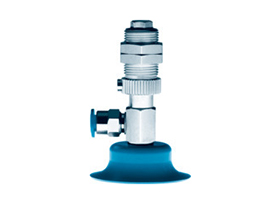
Vacuum suction cup VAS-125-3/8-NBR

FESTO Vacuum suction cup VAS-125-3/8-NBR

Brand:FESTO Model:VAS-125-3/8-NBR

FESTO(费斯托)Brand and Vacuum Suction Cup VAS - 125 - 3/8 - NBR OverviewFESTO (Festo) is a renowned company with an excellent reputation in the field of automation technology. The company has won widespread recognition and trust globally for its innovative products and solutions. Festo is committed to providing high-quality, high-performance pneumatic and electric products for industrial automation. ...

FESTO(费斯托)Brand and Vacuum Suction Cup VAS - 125 - 3/8 - NBR Overview

FESTO (Festo) is a renowned company with an excellent reputation in the field of automation technology. The company has won widespread recognition and trust globally for its innovative products and solutions. Festo is committed to providing high-quality, high-performance pneumatic and electric products for industrial automation. Its product line is diverse, covering many key components, from cylinders, valve islands to sensors.

Among the many products of Festo, the vacuum suction cup VAS - 125 - 3/8 - NBR is a product of great interest. This vacuum suction cup is designed to meet the needs of various industrial application scenarios. The 'VAS' in the model represents the vacuum suction cup series, '125' indicates the diameter of the suction cup is 125mm, '3/8' refers to the size of the connection interface being 3/8 inches, and 'NBR' means the material of the suction cup is Nitrile Butadiene Rubber (NBR). NBR has good wear resistance, oil resistance, and aging resistance, allowing it to maintain stable performance in relatively complex working environments.

Features and Advantages of FESTO (Festo) Vacuum Suction Cup VAS - 125 - 3/8 - NBR

Firstly, in terms of suction performance, VAS - 125 - 3/8 - NBR has excellent adsorption capability. Its larger diameter design allows it to provide a larger adsorption area, thus generating sufficient suction to pick up and transport objects of various shapes and weights. Whether in electronics manufacturing, automotive industry, or food packaging, it can stably complete the task of material adsorption and transfer. Moreover, the suction cup shows good adsorption effects on different surface materials, such as glass, metal, plastic, etc.

Secondly, in terms of durability, due to the use of NBR material, this vacuum suction cup has strong resistance to wear and tear and tearing. During frequent adsorption and release operations, it can maintain a long service life, reducing the frequency of replacing suction cups and lowering operating costs for businesses. At the same time, NBR also has a certain degree of chemical corrosion resistance, allowing it to be used normally in some chemical-containing work environments, further expanding its application range.

Furthermore, the installation and maintenance of VAS - 125 - 3/8 - NBR are very convenient. Its 3/8-inch connection interface design allows it to be quickly connected to common vacuum systems without complex installation steps. For daily maintenance, only regular inspections of the suction cup surface for damage or wear are needed. If necessary, simple cleaning and replacement can be done. This convenient installation and maintenance method improves production efficiency and reduces downtime.

Application Scenarios and Market Prospects of FESTO (Festo) Vacuum Suction Cup VAS - 125 - 3/8 - NBR

Vacuum suction cup VAS-125-3/8-NBR belongs to the Vacuum Technology series under FESTO company, model number VAS-125-3/8-NBR. To purchase or inquire about Vacuum suction cup VAS-125-3/8-NBR, you can directly contact 158 0047 0089 (Mr. He).


FAQ

  • What is the basic function of FESTO pneumatic components?
    FESTO pneumatic components use compressed air as a power source to transmit and convert forces. They can be used to control machine movements, transmit force, or achieve automation. Common pneumatic components include cylinders, pneumatic valves, and pneumatic motors.
  • What are the main types of FESTO pneumatic components?

    1. Cylinders: Used to convert the energy of compressed air into mechanical energy to produce linear motion.

    2. Pneumatic valves: Used to control the direction, speed, and pressure of airflow, regulating the operation of pneumatic systems.

    3. Pneumatic motors: Devices that convert compressed air into rotary motion.

    4. Air tubes and connectors: Used to connect various components in pneumatic systems and transmit air.

  • Do FESTO pneumatic components require regular maintenance? If yes, what are the key points?

    Yes, FESTO pneumatic components require regular maintenance to ensure normal operation and extend service life. Key maintenance points include:

    - Regularly check and replace seals and gaskets to prevent air leakage.

    - Inspect and clean filters to ensure clean air quality.

    - Lubricate moving parts to reduce wear and improve efficiency.

    - Check air tubes and connectors to ensure secure and undamaged connections.

  • How to choose the right FESTO pneumatic components?

    When selecting the appropriate FESTO pneumatic components, consider the following factors:

    Application requirements: Understand the specific working environment and tasks, such as load, speed, and stroke.

    Air source conditions: Ensure that the pressure and flow of the air source meet the component’s requirements.

    Installation space: Confirm available space and choose components of suitable size.

    Environmental factors: Consider the temperature, humidity, and potential corrosiveness of the working environment to select suitable materials and designs.

  • What are common faults in FESTO pneumatic component systems and how to troubleshoot?

    Common pneumatic system faults include:

    Air leakage: Causes efficiency decline; check seals, connections, and tubes, find leak points, and repair or replace.

    Stuck cylinder piston: Possibly caused by dirt or insufficient lubrication; clean the piston and add lubricant.

    Valve failure: Check electrical control signals, ensure smooth airflow, and verify if the valve itself is damaged.

    Insufficient pressure: Inspect air source pressure, filters, and piping to ensure no blockage or leakage.

Related Products