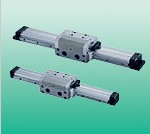
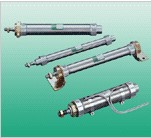
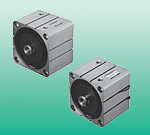
The CMK2-G-FA-32-75-T0H5-D is compact in structure, has good valve rigidity, smooth flow channels, low flow resistance, and uses stainless steel and hard alloy for the sealing surface, ensuring a long service life. It employs PTF packing for reliable sealing and is easy and flexible to operate. For cylinder joints with significant deformation or severe steam leakage, the method of grinding the joint surface is used. The three-piece assembly has a high requirement for the cleanliness of the medium; media containing particulate matter cannot be used and must be filtered out if present as impurities. Additionally, viscous media are not suitable, and the applicable viscosity range for specific products is relatively narrow. Electric actuators are mainly used in applications requiring precise control. With the increasing flexibility requirements in automated equipment, the same device often needs to adapt to the processing needs of workpieces of different sizes. The actuator requires multi-point positioning control and precise control or synchronous tracking of the actuator's operating speed and torque. These controls cannot be achieved with traditional pneumatic control, but electric actuators can easily achieve such control. Thus, cylinders are more suitable for simple motion control, while electric actuators are often used for precise motion control applications. The double-acting torque-resistant cylinder DZH-20-160-PPV-A, pneumatic tube PUN-6X1-S-2-DUO-BSLFR-1/2-D-MIDI-MPA, LFR-1/2-D-MIDI-KCVN-07-M-T3-PQ2-VQ2-RO1, pressure reducing valve LR-1/4-D-O-MIDI, vacuum suction cup VAS-40-1/4-PUR, series D lockable pressure reducing valve LRS-1/4-D-MINIDFM-32-25-P-A-GF, AEVULQ-32-5-P-A, CLR-50-50-R-P-A, DSBC-50-200-D3-PPVA-N3, GRLA-1/8-B, double-acting multi-mounting?DMML-25-50-P-A vacuum suction cup ESV-40-SS, pressure reducing valve LR-3/8-D-O-MIDI-NPTDGC-K-50-1000-PPV-A-GK, vacuum suction cup ESS-40-EU pressure reducing valve LR-M3-G3/4-10I, DFM-63-200-P-A-GFAEVULQZ-25-15-P-A, pressure reducing valve LR-M2-N1/4-10GDSBC-63-200-PPVA-N3, vacuum suction cup ESV-50-CN DGC-25-450-G-PPV-A 532447, DFM-63-80-P-A-KF pressure reducing valve LR-M2-N1/4-10K, series D lockable pressure reducing valve LRS-1-D-O-DI-MAXIAEVULQ-63-10-P-A, GRLA-1/8-BDSBC-32-300-D3-PPSA-N3, DGC-K-50-1100-PPV-A-GK polyurethane pneumatic tube PUN-10X1,5-SG-6-BL-1/4, pressure reducing valve LR-M2-G1/2-10GI pressure reducing valve LR-M3-N3/8
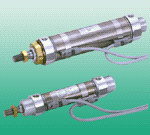
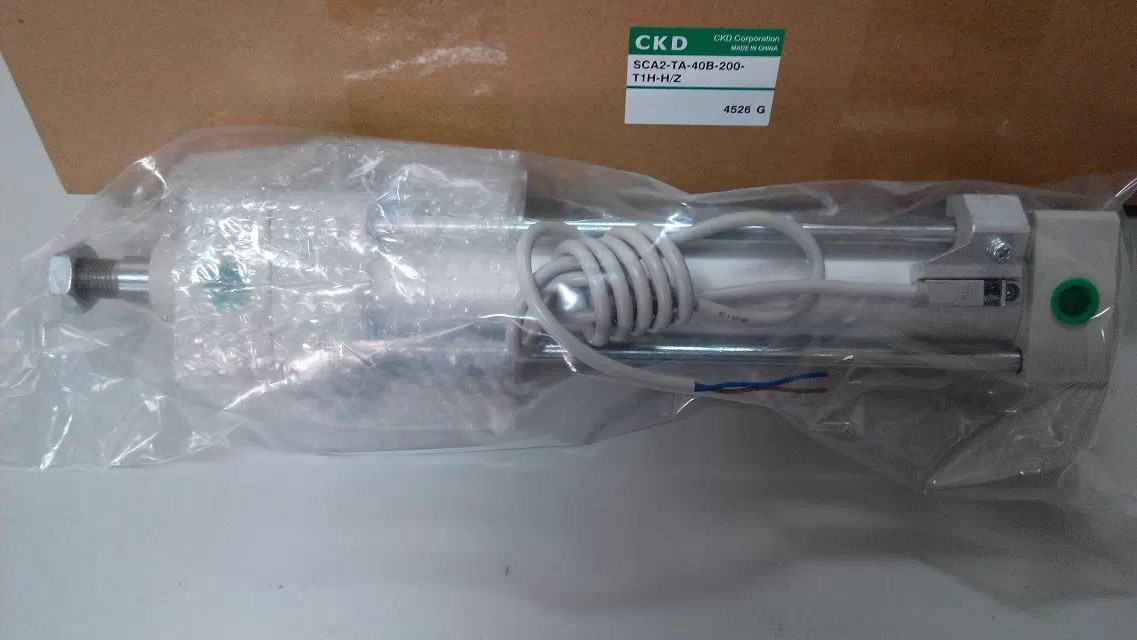
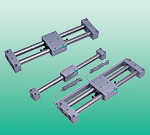
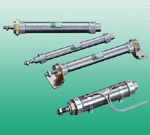
Double acting cylinder CMK2-G-FA-32-75-T0H5-D belongs to the Air Pressure Cylinders series under CKD company, model number CMK2-G-FA-32-75-T0H5-D. To purchase or inquire about Double acting cylinder CMK2-G-FA-32-75-T0H5-D, you can directly contact 158 0047 0089 (Mr. He).
1. Cylinders: Used to convert the energy of compressed air into mechanical energy to produce linear motion.
2. Pneumatic valves: Used to control the direction, speed, and pressure of airflow, regulating the operation of pneumatic systems.
3. Pneumatic motors: Devices that convert compressed air into rotary motion.
4. Air tubes and connectors: Used to connect various components in pneumatic systems and transmit air.
Yes, CKD pneumatic components require regular maintenance to ensure normal operation and extend service life. Key maintenance points include:
- Regularly check and replace seals and gaskets to prevent air leakage.
- Inspect and clean filters to ensure clean air quality.
- Lubricate moving parts to reduce wear and improve efficiency.
- Check air tubes and connectors to ensure secure and undamaged connections.
When selecting the appropriate CKD pneumatic components, consider the following factors:
Application requirements: Understand the specific working environment and tasks, such as load, speed, and stroke.
Air source conditions: Ensure that the pressure and flow of the air source meet the component’s requirements.
Installation space: Confirm available space and choose components of suitable size.
Environmental factors: Consider the temperature, humidity, and potential corrosiveness of the working environment to select suitable materials and designs.
Common pneumatic system faults include:
Air leakage: Causes efficiency decline; check seals, connections, and tubes, find leak points, and repair or replace.
Stuck cylinder piston: Possibly caused by dirt or insufficient lubrication; clean the piston and add lubricant.
Valve failure: Check electrical control signals, ensure smooth airflow, and verify if the valve itself is damaged.
Insufficient pressure: Inspect air source pressure, filters, and piping to ensure no blockage or leakage.