Compressed air is considered the "fourth largest energy source" widely used in the industrial sector, accounting for about 10%-30% of the total industrial energy consumption. With the continuous increase in automation levels and energy costs in the industry, how to efficiently manage compressed air systems has become an important topic for enterprises to save energy. SCM (Supply Chain Management) compressed air management system serves as an advanced integrated solution that monitors and manages the entire process of compressed air production, transmission, and usage through systematized methods, significantly improving the operational efficiency of compressed air systems, reducing energy consumption, and ensuring production stability. This article will explore in detail the core functions of the SCM compressed air management system and its application value in the industrial sector.
1. Concept and Composition of SCM Compressed Air Management System
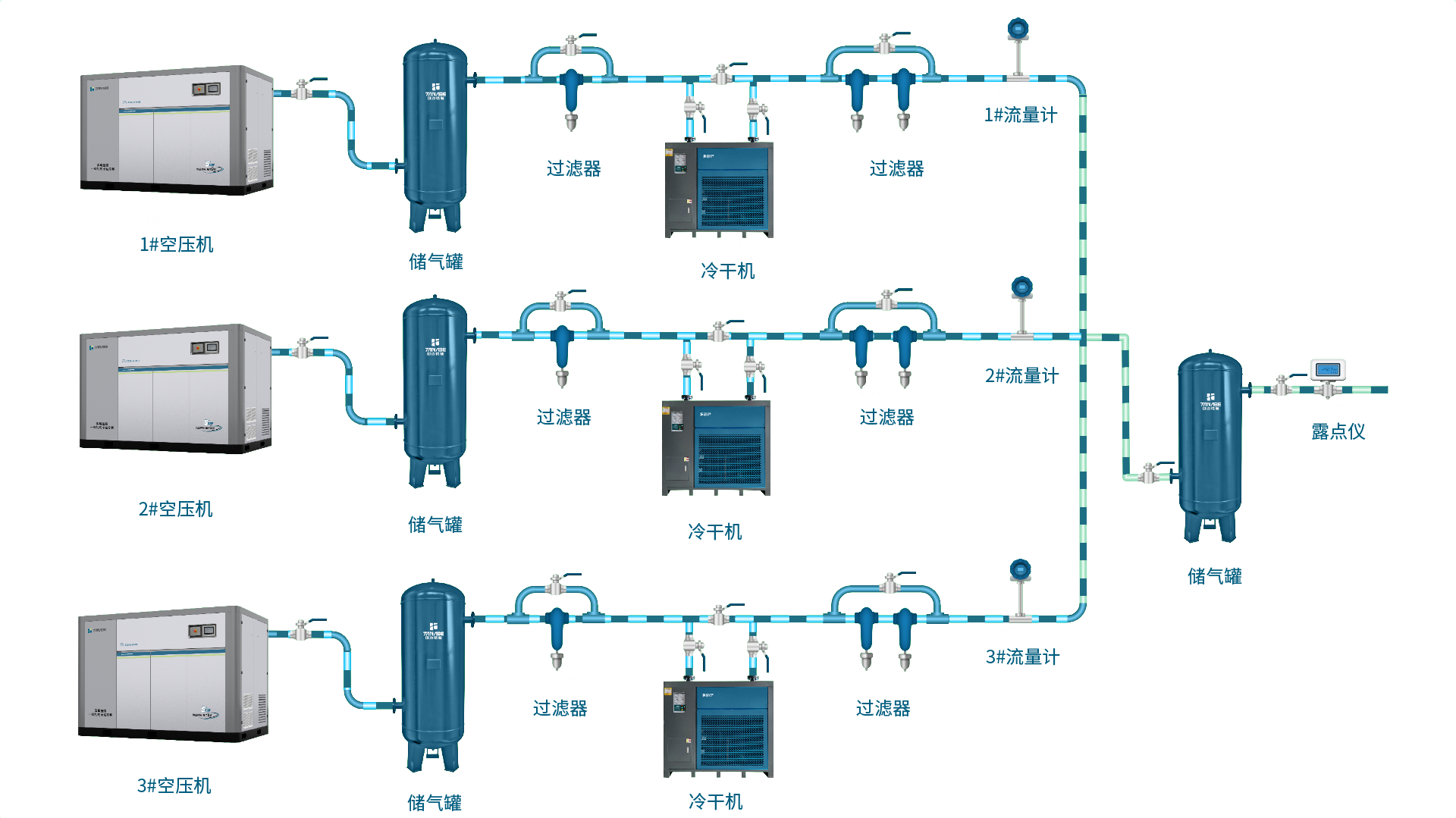
The SCM compressed air management system is an integrated management platform based on modern information technology and automation control technology. It integrates various links of the compressed air system, including the operation control of air compressors, network transmission optimization, end-user air management, and data collection and analysis modules. Through real-time monitoring of key parameters such as compressed air pressure, flow, dew point temperature, and energy consumption, it achieves intelligent management of the entire compressed air life cycle.
The system is mainly composed of the following core components:
1. Data Acquisition Layer: Includes various sensors, flow meters, pressure transducers, and other on-site instrumentation responsible for collecting operational data of the system;
2. Network Transmission Layer: Implements real-time data transmission via industrial Ethernet, wireless communication, and other technologies;
3. Control Execution Layer: Includes variable frequency drives, intelligent relays, and other execution mechanisms that adjust equipment operating status based on system commands;
4. Management Application Layer: Integrates software platforms for data analysis, alarm management, and efficiency evaluation to provide decision support for management personnel.
2. Main Functions of SCM Compressed Air Management System
1. Optimize Energy Usage Efficiency
The SCM system accurately controls the load/unload cycles of air compressors, avoiding unnecessary idling operation and reducing energy consumption by 15%-30%. The system adopts multi-compressor linkage control strategies, automatically adjusting the number and load distribution of running units based on air demand, ensuring the equipment operates in the optimal efficiency range. Simultaneously, it monitors the network pressure fluctuations to identify and eliminate "phantom" consumption caused by excessively high pressure settings, further reducing energy waste.
2. Improve System Operational Stability
Real-time monitoring functions allow the system to promptly detect leaks, filter blockages, dryer faults, and other issues, and send early warnings to maintenance staff to prevent production interruptions caused by equipment failures. The system also features automatic pressure regulation capabilities, quickly responding to sudden changes in gas volume to maintain network pressure stability and ensure the reliability of production processes. Statistical data shows that with SCM management, compressor downtime due to faults can be reduced by more than 60%.
3. Reduce Maintenance Costs
Predictive maintenance based on operational data is a breakthrough advantage of the SCM system. By analyzing variations and trends in equipment parameters, it accurately diagnoses the health of air compressors, dryers, and other key equipment, arranging maintenance before failures occur to avoid high repair costs caused by sudden malfunctions. Meanwhile, operational data recorded by the system provides scientific support for equipment selection and network modifications, avoiding excessive investment or insufficient configuration issues.
4. Achieve Refined Management
The SCM system provides zonal and time-segmented compressed air statistics functions, enabling enterprises to accurately grasp the compressed air consumption status of various departments and production lines, offering data support for internal cost allocation and energy-saving assessments. The system can also identify gas usage characteristics of different production schedules, helping optimize production scheduling, avoid high peak gas usage, and reduce peak electricity demand. Some advanced systems also include carbon emission calculation functions to assist enterprises in achieving sustainable development goals.
5. Extend Equipment Service Life
By averaging the operation time across all compressors, avoiding excessive use of any single unit, the SCM system significantly extends the overall equipment lifespan. It monitors key parameters such as lubricating oil temperature and coolant flow to ensure equipment runs under ideal conditions, reducing abnormal wear and tear. Data shows that under SCM system management, the average service life of compressed air units can be extended by 3-5 years.
3. Application Characteristics of SCM System in Different Industrial Scenes
1. Manufacturing Sector
In decentralized manufacturing industries such as automotive manufacturing and electronics assembly, SCM systems can effectively respond to highly variable air demand. By analyzing the relationship between production shifts and air consumption, it enables collaborative optimization with production planning. For example, in tightly clustered welding stations, the system can forecast high gas demand peaks and pre-adjust compressor outputs to avoid pressure fluctuations that impact weld quality.
2. Process Industry Sector
The process industry, including chemical and pharmaceutical continuous production, requires extremely high system stability and air purity. SCM systems continuously monitor dew point temperature and oil content, ensuring the quality of dry compressed air complies with process requirements. In key equipment areas such as pneumatic actuator centralized zones, the system sets independent pressure monitoring points to prevent production incidents caused by insufficient pressure.
3. Food and Beverage Industry
This sector has special requirements on compressed air quality. SCM systems monitor parameters such as microbial contamination levels and particulate matter concentration to ensure compressed air meets food safety standards. The system can also detect seasonal variations in packaging machinery gas usage, optimizing equipment operation strategies to reduce off-season energy consumption.
4. Key Measurement Factors for Implementing SCM System
Successful deployment of an SCM compressed air management system requires consideration of the following key factors:
1. System Compatibility: Evaluate compatibility between existing equipment and SCM system interfaces, requiring hardware modification if necessary;
2. Data Accuracy: Selection and installation location of sensors directly affect monitoring effectiveness and should comply with industry standards;
3. Staff Training: Operators need to understand basic principles and usage methods of the system to fully utilize system efficiency;
4. Continuous Optimization: Post-deployment, continue adjusting control parameters based on operational data to achieve sustained performance improvement.
5. Future Development Trends
With the widespread adoption of Industrial Internet of Things (IIoT) technologies, SCM systems are moving towards greater intelligence, including:
- Using AI algorithms for precise forecasting of air demand;
- Integrating digital twin technology for system simulation and optimization;
- Deep integration with factory energy management systems (EMS) to participate in full-factory energy coordination;
- Applying blockchain technology to realize cross-enterprise trades and shared compressed air management.
Conclusion
The SCM compressed air management system is an essential tool in the industrial energy-saving sector. Through systematized and intelligent management methods, it effectively solves traditional compressed air system issues such as low energy efficiency, difficult maintenance, and poor stability. With the advancement towards a "dual-carbon" target and intelligent manufacturing, SCM systems will continue evolving to provide more efficient and sustainable solutions.