Language
Home > FESTO > Connection Technology
Plastic Air Hose PFAN-10X1,5-NT

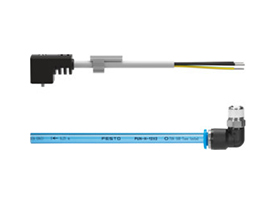
FESTO Plastic Air Hose PFAN-10X1,5-NT

Brand:FESTO Model:PFAN-10X1,5-NT

FESTO (Festo) Plastic Air Hose PFAN - 10X1.5 - NT Product OverviewFESTO (Festo), as a globally renowned supplier of automation technology, is known for the high quality and reliability of its products. The PFAN - 10X1.5 - NT plastic air hose is a highly regarded product in the Festo range. This hose is mainly used in pneumatic systems, playing a crucial role in transporting compressed air.“PFAN” r ...

FESTO (Festo) Plastic Air Hose PFAN - 10X1.5 - NT Product Overview

FESTO (Festo), as a globally renowned supplier of automation technology, is known for the high quality and reliability of its products. The PFAN - 10X1.5 - NT plastic air hose is a highly regarded product in the Festo range. This hose is mainly used in pneumatic systems, playing a crucial role in transporting compressed air.

“PFAN” represents the specific series of this hose, while “10X1.5” specifies its dimensions. “10” indicates that the hose has an outer diameter of 10mm, and “1.5” refers to the hose's wall thickness of 1.5mm. This specification is carefully designed to meet certain gas flow requirements while ensuring the stability of the hose under pressure. “NT” typically stands for specific characteristics or application scenarios of the hose.

When producing this plastic air hose, Festo employs advanced manufacturing processes and high-quality plastic materials. These materials have excellent resistance to chemical corrosion, wear, and aging, allowing the hose to operate stably over long periods in complex industrial environments. This reduces system failures and maintenance costs due to hose damage.

Performance Advantages of FESTO (Festo) Plastic Air Hose PFAN - 10X1.5 - NT

Firstly, in terms of pressure resistance, the PFAN - 10X1.5 - NT plastic air hose has outstanding pressure resistance. It can withstand a certain range of high pressure, ensuring stable compressed air delivery in pneumatic systems. This is due to its well-designed wall thickness and high-quality material selection, making the hose less likely to deform or burst under high-pressure conditions, ensuring the safe operation of the system.

Secondly, the flexibility of this hose is excellent. In actual industrial applications, the layout of pneumatic systems is often complex, requiring hoses that can bend and install flexibly. The PFAN - 10X1.5 - NT plastic air hose can easily adapt to various bending angles and installation spaces, facilitating the construction and modification of systems by users. Even after multiple bends, it does not show significant creases or damage, ensuring the smoothness of gas delivery.

Furthermore, the Festo plastic hose PFAN - 10X1.5 - NT has good temperature resistance. It can operate normally within a certain temperature range, whether in high-temperature environments or low-temperature environments, maintaining stable physical and chemical properties. This makes it suitable for various industrial scenarios, such as high-temperature workshops and cold storage.

Additionally, the inner wall of this hose is very smooth. A smooth inner wall reduces resistance during gas flow, lowering energy loss and improving the efficiency of the pneumatic system. It also effectively prevents the adhesion of impurities and dirt, reducing the likelihood of faults caused by pipe blockages.

FESTO (Festo) Plastic Air Hose PFAN - 10X1.5

Plastic Air Hose PFAN-10X1,5-NT belongs to the Connection Technology series under FESTO company, model number PFAN-10X1,5-NT. To purchase or inquire about Plastic Air Hose PFAN-10X1,5-NT, you can directly contact 158 0047 0089 (Mr. He).


FAQ

  • What is the basic function of FESTO pneumatic components?
    FESTO pneumatic components use compressed air as a power source to transmit and convert forces. They can be used to control machine movements, transmit force, or achieve automation. Common pneumatic components include cylinders, pneumatic valves, and pneumatic motors.
  • What are the main types of FESTO pneumatic components?

    1. Cylinders: Used to convert the energy of compressed air into mechanical energy to produce linear motion.

    2. Pneumatic valves: Used to control the direction, speed, and pressure of airflow, regulating the operation of pneumatic systems.

    3. Pneumatic motors: Devices that convert compressed air into rotary motion.

    4. Air tubes and connectors: Used to connect various components in pneumatic systems and transmit air.

  • Do FESTO pneumatic components require regular maintenance? If yes, what are the key points?

    Yes, FESTO pneumatic components require regular maintenance to ensure normal operation and extend service life. Key maintenance points include:

    - Regularly check and replace seals and gaskets to prevent air leakage.

    - Inspect and clean filters to ensure clean air quality.

    - Lubricate moving parts to reduce wear and improve efficiency.

    - Check air tubes and connectors to ensure secure and undamaged connections.

  • How to choose the right FESTO pneumatic components?

    When selecting the appropriate FESTO pneumatic components, consider the following factors:

    Application requirements: Understand the specific working environment and tasks, such as load, speed, and stroke.

    Air source conditions: Ensure that the pressure and flow of the air source meet the component’s requirements.

    Installation space: Confirm available space and choose components of suitable size.

    Environmental factors: Consider the temperature, humidity, and potential corrosiveness of the working environment to select suitable materials and designs.

  • What are common faults in FESTO pneumatic component systems and how to troubleshoot?

    Common pneumatic system faults include:

    Air leakage: Causes efficiency decline; check seals, connections, and tubes, find leak points, and repair or replace.

    Stuck cylinder piston: Possibly caused by dirt or insufficient lubrication; clean the piston and add lubricant.

    Valve failure: Check electrical control signals, ensure smooth airflow, and verify if the valve itself is damaged.

    Insufficient pressure: Inspect air source pressure, filters, and piping to ensure no blockage or leakage.

Related Products