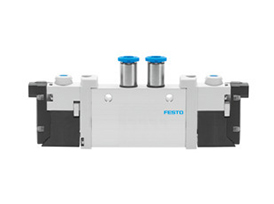
FESTO (Festo) NEV - 4DA/DB - ISO Terminal Plate Assembly Overview
FESTO (Festo), as a globally renowned supplier of automation technology, is known for the high quality, innovation, and reliability of its products. The terminal plate assembly NEV - 4DA/DB - ISO is an important product with significant application value from Festo. This terminal plate assembly is designed and manufactured in strict accordance with ISO standards, giving it wide universality and compatibility worldwide.
Visually, the NEV - 4DA/DB - ISO terminal plate assembly is designed compactly with a rational structure. It utilizes advanced materials and exquisite manufacturing processes, ensuring the durability and stability of the product. In automation systems, the terminal plate assembly plays a key role in connecting and supporting. The NEV - 4DA/DB - ISO, with its unique design, effectively connects all components closely together, ensuring the normal operation of the entire system.
Features and Advantages of FESTO (Festo) NEV - 4DA/DB - ISO Terminal Plate Assembly
Firstly, in terms of performance, NEV - 4DA/DB - ISO has excellent sealing performance. It uses special sealing materials and sealing structures, effectively preventing media leakage and ensuring the safety and reliability of the system. Whether in high-pressure or low-pressure environments, this terminal plate assembly maintains good sealing effects, greatly reducing failures and losses caused by leaks.
Secondly, the terminal plate assembly has good corrosion resistance. In harsh working environments, such as the chemical and food processing industries, equipment is prone to corrosion by various chemicals. NEV - 4DA/DB - ISO is made of corrosion-resistant materials, capable of withstanding the corrosion of a variety of chemicals, extending the service life of the product and reducing maintenance costs.
Furthermore, NEV - 4DA/DB - ISO has a high degree of flexibility. It can be custom-designed according to different application requirements, meeting the diverse needs of users. Whether in small automated equipment or large industrial production lines, this terminal plate assembly can leverage its unique advantages to provide users with efficient and stable solutions.
In addition, Festo is very strict in terms of product quality control. Each NEV - 4DA/DB - ISO terminal plate assembly undergoes rigorous testing and inspection to ensure it meets international standards and customer requirements. This gives users greater peace of mind when using the product, reducing risks associated with product quality issues.
Application Areas of FESTO (Festo) NEV - 4DA/DB - ISO Terminal Plate Assembly
In the field of industrial automation, the NEV - 4DA/DB - ISO terminal plate assembly has a wide range of applications. For example, in the automotive manufacturing industry, it can be used for robotic arms, conveyors, and other components in automated production lines.
End plate assembly NEV-4DA/DB-ISO belongs to the Valves and Islands series under FESTO company, model number NEV-4DA/DB-ISO. To purchase or inquire about End plate assembly NEV-4DA/DB-ISO, you can directly contact 158 0047 0089 (Mr. He).