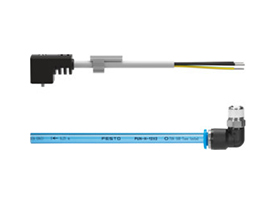
FESTO (Festo) Quick Connector QS - G1/8 - 4 Introduction
FESTO, as a globally renowned supplier of pneumatic and electric drive technology, has a wide range of applications for its QS - G1/8 - 4 connector in the industrial field. The QS - G1/8 - 4 connector is an important product in the Festo quick connector series. 'QS' represents the specific series identifier of the Festo quick connector, which is known for its quick connection and disconnection features, greatly improving work efficiency. 'G1/8' indicates that the thread specification of the connector is G1/8 inch, a common pipe thread size used in many pneumatic systems. The '4' represents that the outer diameter of the connector's pipe fitting is 4mm.
This connector is designed to meet the needs of pneumatic connections in various industries such as industrial automation, mechanical manufacturing, and food packaging. It employs advanced manufacturing processes and high-quality materials to ensure the reliability and durability of the product. In pneumatic systems, it can be used to connect different pneumatic components, such as cylinders, solenoid valves, air pipes, etc., to achieve smooth gas transmission.
Features of FESTO (Festo) Quick Connector QS - G1/8 - 4
Firstly, quick connection is a significant feature of this connector. The QS - G1/8 - 4 connector employs a unique quick plug-in design, eliminating the need for any tools. Operators only need to insert the air pipe into the connector to achieve a secure connection; when disconnection is needed, simply press the connector's release button, and the air pipe can be easily removed. This quick connection and disconnection method not only saves a lot of installation and maintenance time but also improves work efficiency, especially suitable for situations that require frequent air pipe replacement or equipment debugging.
Secondly, it has excellent sealing performance. When designing and manufacturing the QS - G1/8 - 4 connector, Festo adopted a high-precision sealing structure and high-quality sealing materials. Its sealing design effectively prevents gas leakage, ensuring the stable operation of the pneumatic system. Even in harsh working environments such as high pressure and high temperature, this connector can maintain good sealing performance, reducing energy waste and the probability of equipment failure.
Furthermore, the connector has good corrosion resistance. Its housing is typically made of corrosion-resistant materials, such as metal alloys or engineering plastics, capable of withstanding the erosion of various chemicals. This allows the QS - G1/8 - 4 connector to be safely used in damp and corrosive gas environments, extending the product's service life and reducing corporate usage costs.
In addition, the QS - G1/8 - 4 connector has strong versatility. It is compatible with various specifications of air pipes and pneumatic components, meeting the diverse needs of different users. Whether on small experimental equipment or large industrial production lines, its presence can be found.
Application Scenarios and Maintenance of FESTO (Festo) Quick Connector QS - G1/8 - 4
In
Fitting QS-G1/8-4 belongs to the Connection Technology series under FESTO company, model number QS-G1/8-4. To purchase or inquire about Fitting QS-G1/8-4, you can directly contact 158 0047 0089 (Mr. He).